Please Sit Politely: A Field Guide to Britain’s Bossiest Bench Plaques
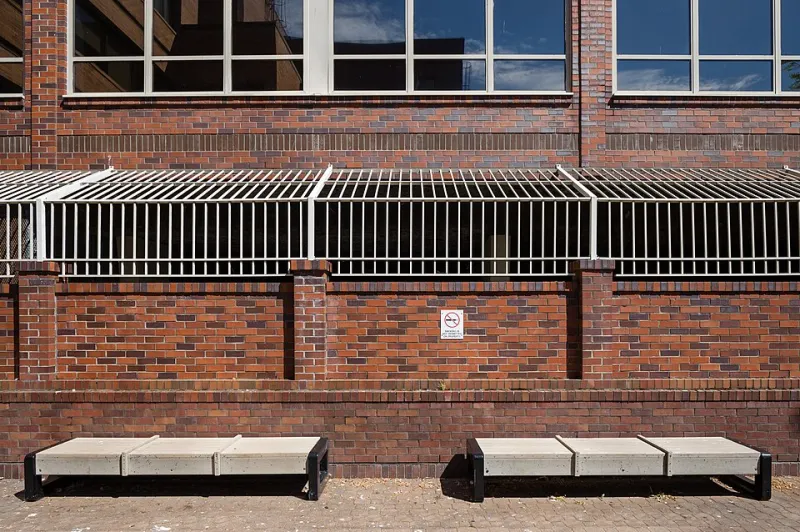
Photo: Michal Klajban, CC BY-SA 4.0, via Wikimedia Commons
Britain has produced many great forms of public literature: the seaside postcard, the bus timetable, the passive-aggressive note taped to a shared fridge. But none is quite as quietly magnificent as the plaque on a public bench. It is a memoir, a warning, a haiku and, occasionally, a threat delivered in laminated form. As the nights draw in this November, there is no better time to audit the nation’s memorial seating — preferably while eating a slightly sad sandwich and watching a dog refuse to move.
At Farfillimore, we have a soft spot for the bench plaque because it is the most democratic form of monument we have. You do not need a plinth, a statue or a visiting dignitary. You need a slat of wood, a brass rectangle and a strong opinion about litter.
The plaque as tiny theatre
Most bench dedications begin sweetly enough. 'In loving memory of Margaret, who loved this view.' Lovely. 'For Stan, who walked the dog here every morning and never once picked up after it.' Less lovely, more documentary. Then there is the classic mystery plaque: 'To M, from all of us. You know why.' You do not know why. Nobody knows why. But for the next twenty years, the bench becomes a local legend, a cryptic crossword with splinters.
A good bench plaque can turn a stretch of promenade into a whispered soap opera. Who was Arthur? Why did he hate the seagulls so much? Was Joan really banned from the parish council for saying what everyone was thinking about the hanging baskets? The bench does not answer. It simply sits there, being wooden and judgemental.
The passive-aggressive slat
Then we come to the inscriptions that are less memorial and more municipal warning shot. 'This seat is for quiet reflection. It is not a picnic table, a phone booth or a crèche.' You can almost hear the committee meeting. 'Please do not feed the pigeons. They have enough problems.' Fair. 'In memory of Peter, who hated litter and would have said something.' This is not a dedication; it is a posthumous enforcement notice.
Some plaques are so specific they feel like the opening line of a crime novel. 'For Eileen. She knew what the council did in 1987.' No context. No follow-up. Just a bench, a pigeon and a growing sense that local government has a lot to answer for.
The laws of the bench
Bench etiquette is rarely written down, which is precisely why it is so fiercely observed. The unspoken rules are simple. If a stranger is already sitting at one end, you do not sit at the other end unless there is no alternative. You do not sit in the middle and force a conversation about the weather. You do not eat a full Sunday roast on a memorial bench, even if the plaque does say 'He loved a picnic.' And if the inscription says 'Please sit and think of Doreen,' you sit and think of Doreen, even if you never met her and your main thought is that the seagulls are getting bold.
There is also the delicate art of the apologetic nod: the silent acknowledgement that you are briefly borrowing someone else’s grief for a sit-down. It is one of the most British interactions available in public. No words are exchanged. A small nod occurs. Everyone feels mildly awkward and secretly quite moved.
Mystery, myth and municipal afterlife
Benches have a strange afterlife. Plaques are replaced, repolished or mysteriously removed. A bench can be adopted, repainted, moved ten feet to the left and given a new life as a bus-stop ornament. Local historians love them because they are small, dateable and usually covered in pigeon-related evidence.
In 2026, the bench remains one of the few public spaces where you can sit for free, do nothing and be part of a story. It is a village’s opinion column, its memory box and its emergency seating all at once. Some are poignant. Some are prickly. Some are so passive-aggressive they should be listed as local heritage assets.
How to read a bench
Think of every plaque as belonging to a genre. The Eulogy is warm and slightly tearful. The Instruction is a bench with a job description. The Riddle is a plaque that assumes you were at the meeting. The Local Feud is anything involving dogs, cyclists or the parish council. And then there is the Unnecessarily Specific, which names a date, a weather condition and a minor disagreement about a gate.
So next time you see a memorial bench, do not simply sit. Read. Wonder. Briefly consider whether you are allowed to put your feet up. The bench speaks, and what it mostly says is: 'Please wipe your shoes, remember Doreen, and do not feed the pigeons.'