The Biscuit-Tin Economy: Britain’s Honesty Stalls, Graded by Vibes and Courgette Ethics
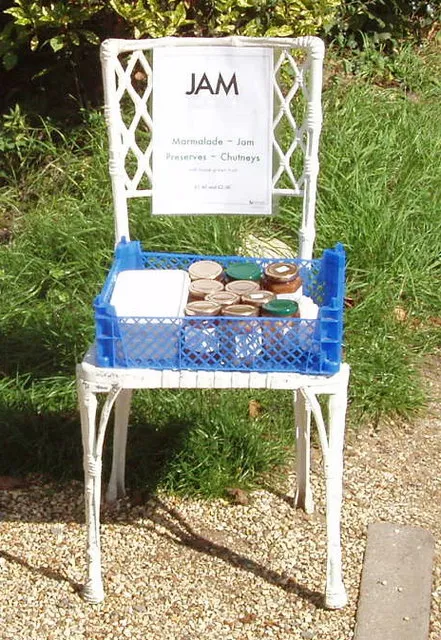
Photo: David Hawgood, CC BY-SA 2.0, via Wikimedia Commons
Britain has many grand institutions: the shipping forecast, the apologetic queue, the belief that a cup of tea can fix a broken boiler. But none is quite so quietly magnificent as the roadside honesty stall — a table, a shed or a repurposed fridge offering eggs, jam, marrows and the vague promise that strangers will do the right thing.
In 2026, when every other transaction wants an app, a QR code and a terms-of-service novella, the honesty box feels almost reckless. It is commerce reduced to a biscuit tin, a few coins and a note saying ‘correct change appreciated, Sharon.’ It is also, occasionally, a theatre of passive aggression conducted entirely through laminated signs.
The ranking rules
To rank Britain’s unattended roadside shops, we have ignored actual commercial success and focused on what matters: trust architecture, signage drama, produce plausibility, pricing clarity, weatherproofing and the subtle art of making you feel guilty about a single runner bean. Extra points for a tin containing a foreign coin, a button and an IOU written in biro.
7. The Optimistic Egg Cabinet
This is the entry-level honesty stall: a cool box by a gate, a hand-written sign and eggs in reused cartons that once held something entirely different. The pricing is usually ‘£2.50’ with no further detail, which leaves you wondering whether that is per box, per egg or per vague feeling of rural wellbeing.
The signage is where it gets good. ‘Please don’t swap the eggs, Denise.’ ‘Correct money only.’ ‘If the box is empty, please don’t take the cool box.’ It is not so much a shop as a trust exercise with Salmonella paperwork. Still, the eggs are usually excellent, and the biscuit tin has the faint metallic smell of honest capitalism.
6. The Marrow Amnesty Table
The marrow stall is Britain at its most generous and most threatening. A table outside a cottage groans with courgettes the size of small dogs, a few potatoes and a sign reading ‘Surplus veg — 50p each, proceeds to the air ambulance.’ There is always one marrow that looks like it has seen things.
The passive aggression comes in the small print: ‘No, not that one. The small one. The big one is for display.’ Or ‘Please leave the money in the tin, not under the stone. The stone is for the cat.’ You leave 50p, take a courgette and spend the next week pretending to be the sort of person who makes soup.
5. The Jam Shelf With Legal Caveats
The jam stall offers damson, rhubarb and something labelled only ‘mixed.’ The jars have gingham lids and labels written in biro, plus a small disclaimer: ‘Homemade. No liability for pips.’ This is the closest Britain gets to a legal department in a hedge.
The honesty box here is often a Quality Street tin, which feels appropriately festive for a Tuesday in November. Pricing is clear until you realise the sign says ‘£3 or £5 for two,’ which is either a bargain or a maths test. The jam is delicious. The sense of moral obligation is free.
4. The Biscuit Tin of State
This stall has evolved beyond produce into a small system of government. There is a tin, a notebook, a pen on a string and a notice explaining that the tin is checked on Fridays. Alongside coins you will find a euro, a washer and a small plastic dinosaur. Nobody knows whether the dinosaur is payment or stock.
The pricing structure is creative. ‘Eggs £2. Beans £1.50. Cake 80p or £2 for a generous slice.’ You leave £2, take a slice of cake and feel briefly like a minor character in a village conspiracy. The sign says ‘Honesty box’ but the subtext says ‘We know where you live, mostly because we do the post round.’
3. The Runner-Bean Tribunal
This is the stall that has clearly been burned before. The signage begins politely — ‘Runner beans, 50p a bag’ — and escalates to ‘Please do not pick your own,’ ‘CCTV in operation’ and a laminated photograph of an eye. The eye is not connected to anything. The eye is a state of mind.
The produce is good, the bags are generous and the tin is padlocked to a paving slab, which is a touching display of optimism. You pay your 50p, take your beans and make a mental note to be a better person. It is the only shop in Britain where you can feel both welcomed and cautioned in the same transaction.
2. The Shed Fridge of Dreams
The shed fridge is the honesty stall’s eccentric uncle. It offers milk, cakes, chutney and a mysterious Tupperware labelled ‘stew — £2.’ There is a note: ‘Please don’t let the cat in. He is not for sale.’ The fridge hums. The tin jingles. The whole thing feels like a tiny episode of The Archers written by someone who has had too much coffee.
What elevates it is the range. You can buy a dozen eggs, a jar of marmalade and a second-hand paperback about dry-stone walling in one stop. The pricing is negotiable in spirit, if not in fact. You leave £5, take £3.50 of goods and spend the rest on the warm glow of being trusted.
1. The Full Village Trust Fall
The winner is the all-purpose honesty stall: eggs, jam, veg, plant cuttings, a book swap and a small tin museum of local history. The sign simply says ‘You know what to do.’ It is the most British sentence ever written. There is no CCTV, no laminated eye, no mention of Denise. Just a tin, a table and a community quietly daring you to be decent.
It should not work. It does. The produce is good, the prices are fair, and the biscuit tin contains enough small change to make you believe in society again. In 2026, when so much of life is tracked, scanned and optimised, the honesty stall remains a tiny act of civic optimism. It is not perfect — someone has clearly taken a marrow without paying — but it is ours.
So next time you see a wobbly table and a hand-written sign, stop. Buy the eggs. Leave the correct change. And whatever you do, do not swap the eggs. Denise is watching.