The Civic Art of Being Slightly Wrong: Britain’s Public Clocks, Graded
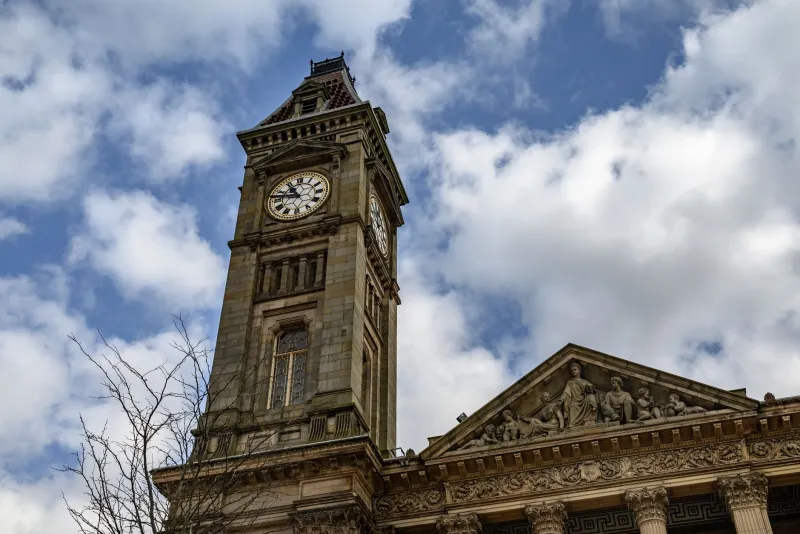
There is a certain town hall clock, in a certain market town, that has been seven minutes fast for so long that the seven minutes are now part of the local dialect. Ask for the time and someone will say ‘ten past, but town hall time’ as if consulting a mood rather than a mechanism. In 2026, when every phone is a precision instrument, the public clock survives precisely because it is not. It is theatre. It is a landmark with a grudge. It is the only piece of civic infrastructure that can be wrong in public for decades and still get a Christmas card.
This is not a guide to the worst clocks. It is a guide to the best ones: the dials that have developed personality, the towers that have opinions, the roadside oddities that keep time according to a mixture of tradition, superstition and whoever last had the ladder. Each is graded on drama, punctuality and the quality of the excuse nailed to the door.
The grading system
Drama is about silhouette and scene-stealing: does the clock interrupt a skyline like a stern aunt at a wedding? Punctuality is not accuracy; it is consistency. A clock that is reliably eleven minutes slow is more trustworthy than one that flickers between truth and chaos. The excuse grade rewards laminated notices, biro apologies and any sentence containing the phrase ‘awaiting a part’.
Names have been changed, partly to protect the innocent and partly because the clocks would only argue.
The Town Hall Optimist
This is the classic. A Victorian tower, a gilt face, a minute hand that has been running early since a jubilee that nobody now agrees on. Locals subtract seven minutes automatically. Visitors do not, and spend the rest of the day wondering why the bus left early and the bakery shut before lunch.
It is not broken. It is eager. The notice on the door says the mechanism is ‘being regulated’, which is civic-speak for ‘we have tried nothing and are all out of ideas’. The clock has become a small act of local identity: to know its error is to belong.
Grades: Drama A, Punctuality D, Excuse A-minus. The laminated notice has a coffee ring and a whiff of quiet defiance.
The Memorial Dial That Runs on Folklore
A church-tower clock stopped at 3.17. The parish will tell you, with tremendous seriousness, that this is the hour the old bell cracked, or the hour the last rector fell off a ladder, or the hour a swan got into the vestry. Nobody can agree because the story is now more important than the mechanism. The clock is not wrong; it is commemorative.
It is wound for weddings and funerals, when it is allowed to tick for a few dignified hours before returning to its preferred state of reverie. The excuse is not written down. It is transmitted by raised eyebrow.
Grades: Drama B, Punctuality F, Excuse B-plus for sheer nerve.
The Painted-On Hands
Somewhere in a village hall is a clock face with hands painted directly onto the dial at ten past ten. It has never worked. It has never claimed to work. The hands are there for balance, like a tie on a man who has no intention of going to the office.
This is the most honest clock in Britain. It cannot be late. It cannot be fast. It is simply decorative, and yet people still glance at it when the tea urn is running late. That is the power of the public clock: even a lie painted on wood can command a queue.
Grades: Drama C, Punctuality N/A, Excuse A for not needing one.
The Roadside Clock With No Numerals
A clock on a stick beside a roundabout, attached to a garden centre or a car wash or a small enterprise that has changed hands four times. It has no numerals, so it tells time in moods: nearly lunch, definitely tea, too late for the post office. It is also wrong, but in a way that feels philosophical.
The excuse is a strip of gaffer tape across the bottom: ‘new mechanism on order’. The order was placed, allegedly, in a previous decade. The tape has weathered to a soft grey, like a medal.
Grades: Drama B, Punctuality E, Excuse B. Would be higher if the tape were laminated.
The Clock That Is Right Twice a Day and Smug About It
A stopped clock at a crossroad, its hands frozen at 4.20. Locals use it as a meeting point rather than a timekeeper: ‘See you at the stopped clock.’ It is accurate twice a day, which is more than some committee minutes can manage, and it has developed the serene superiority of something that no longer has to try.
The excuse is a small plaque: ‘Please do not adjust.’ It does not explain why. It does not need to. The clock has retired and is enjoying its garden.
Grades: Drama B, Punctuality F but consistent, Excuse A.
The Committee Clock
The town clock that is reset after every local election, usually backwards, usually by accident, usually after a photograph. It gains a few minutes when the mayor is in a hurry and loses them when the budget is discussed. It is less a timepiece than a barometer of civic energy.
The excuse is a statement from the parish council, which is three paragraphs long and contains the word ‘ongoing’. The clock is not malfunctioning; it is in consultation.
Grades: Drama A, Punctuality D, Excuse C for length.
Why the wrong clock wins
A wristwatch is a tool. A phone is an oracle. A public clock is a character in the town’s ongoing soap opera, and Britain has a soft spot for characters who are unreliable but well-meant. The seven minutes fast are not a failure of engineering. They are a local agreement, a small piece of shared knowledge, a reason to say ‘town hall time’ and feel briefly at home.
So next time you see a dial that disagrees with your phone, do not report it. Read the notice. Admire the ladder. Check whether the hands are painted on. In 2026, the most human timekeeper in Britain may still be the one that is ten past always, and entirely unbothered about it.