Squeak, Steam and the Sacred Tap: A Field Guide to Britain’s Village Hall Tea Urns
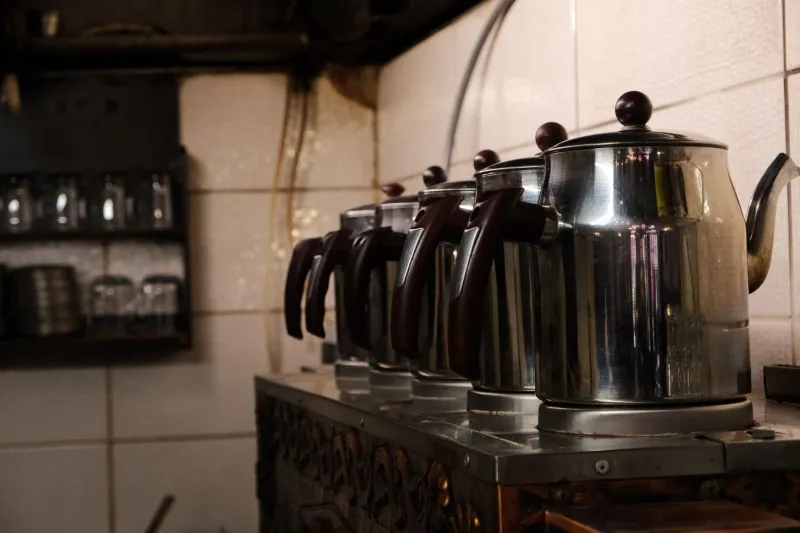
Every village hall has one. It lurks by the kitchen hatch, a silver cylinder with a black lid and a tap that has seen things. It is not glamorous. It is not clever. It has no app, no firmware and absolutely no opinion on your sourdough starter. But without the village hall tea urn, the British social calendar would collapse into a loose arrangement of people standing about holding empty mugs and wondering why they came.
The urn is the true infrastructure of community life. Councils talk about levelling up; the urn simply gets on with it. It waters the quiz teams, the scout pack, the church cleaning rota, the bring-and-buy sale and the emergency committee meeting called to discuss whether the hall clock should be allowed to chime after 9pm. It is a humble machine, but it is also a small stainless-steel deity with a tap.
Here at Farfillimore, we believe these unsung appliances deserve proper critical attention. So we have devised the Village Hall Tea Urn Index, grading each specimen on patina, tap squeak, queue etiquette, technical hazards and the sacred hierarchy of switch-on rights. It is not scientific. It is barely fair. It is, however, deeply British.
The Patina Scale: From Borrowed Shine to Geological
A new tea urn is a suspicious object. It gleams. It looks like it has never known the fug of a rainy Tuesday coffee morning or the faint aroma of a hundred digestives. In village hall terms, that kind of shine is practically indecent. The good urns wear their history.
Grade A patina is a fine, cloudy bloom across the stainless steel, achieved through decades of steam, hard water and the occasional desperate scrub with a green scourer. It says: I have boiled for the WI, and I have boiled for the parish council, and I have boiled for a man called Keith who always brings his own mug. Grade B is a lightly spotty finish, usually the result of a new committee member attacking it with lemon-scented surface spray and a look of misplaced optimism.
Grade C is the dreaded fur-lined interior, where the limescale has begun to resemble a small geological feature. One does not clean this away so much as negotiate with it. Grade D is any urn with a handwritten label saying “DO NOT USE — FAULTY” that has been sellotaped to the lid since 2019. Grade E is the urn that has been replaced by a catering flask and a kettle, which is not an urn at all, just surrender in a plastic jacket.
The Tap Squeak: Britain’s Most Reliable Doorbell
The tap is the urn’s voice. A good tap squeaks in a very particular way: a short, dignified creak followed by a confident glug. It should be loud enough to announce that tea is imminent, but not so loud that the vicar looks up mid-prayer. The ideal squeak sits somewhere between a rusty gate and a mouse clearing its throat.
We grade tap squeak on a five-point scale. One squeak means the tap has been recently oiled, possibly by someone with a secret engineering past. Three squeaks is the sweet spot: characterful, reliable, faintly theatrical. Five squeaks means the tap has developed a personality and may need to be addressed by name before use. If the tap screams, dribbles sideways and then fires a jet of boiling water at the vicar’s ankles, that is not a squeak. That is an incident, and it automatically enters the urn into the technical hazards category.
Queue Etiquette: The Invisible Rota
The urn does not just dispense tea. It dispenses social order. A village hall queue is a delicate ecosystem held together by unspoken rules. Mugs are placed on the trestle table in strict order of arrival. The person who brought the milk goes first, because they have suffered. The person who brought the biscuits goes second, because they are a saint. The person who brought neither but has been holding forth about parking since 7.15pm goes last, and everyone knows it.
There is also the matter of the Strong Tea Contingent. These are the attendees who believe tea should be dark enough to strip paint and will stand by the urn for some time, breathing gently on the tap as if willing it to brew harder. They are not to be rushed. To rush them is to invite a lecture on the declining standards of municipal catering.
Grade A queue etiquette means everyone gets a drink, nobody’s mug is mistaken for somebody else’s, and the last person still gets a biscuit. Grade C means the milk has run out and a debate has broken out about whether semi-skimmed is a woke conspiracy. Grade F means someone has used the urn’s hot water tap to rinse a dog bowl. There is no appeal.
Technical Hazards: Steam, Flex and the Fuse of Damocles
Every village hall tea urn is a small lesson in electrical humility. The flex is usually too short, the plug is usually too old and the socket is usually located directly behind a stack of folding chairs. Operating an urn requires the calm crouch of a bomb disposal expert and the philosophical acceptance that the fuse may blow halfway through the Macmillan coffee morning.
There is also the steam. A boiling urn produces a gentle cloud that condenses on the kitchen window, the noticeboard and any nearby pensioner wearing glasses. This is not a fault. It is atmosphere. The truly great urns create a microclimate in which the raffle tickets go slightly limp and the sponge cakes acquire a faint sheen.
Our hazard grading ranges from “Mild Peril” (a slightly warm flex) to “Fuse of Damocles” (the plug sparks when the urn is switched on and everyone pretends not to notice). Any urn that requires a volunteer to stand beside it with a wooden spoon and a look of quiet terror automatically receives an honourable mention.
The Sacred Duty of Switching It On
Finally, we come to the unspoken hierarchy. In every hall, there is one person who switches the urn on. It is rarely the chair. It is never the newcomer. It is the person who knows where the fuse box is, which cupboard contains the teabags and why the left-hand socket must never be used because of the incident. This person is the urn’s high priest or priestess, and their authority is absolute.
They arrive early. They fill the urn to the correct line, which is not the maximum line, because the maximum line is a lie. They switch it on with a firm click and a brief, proprietary glance at the tap. Then they stand back and let the steam rise. By the time the first arriver asks, “Is the urn on?” the answer is already yes. It is always yes. That is the whole point.
So here’s to the village hall tea urn: stained, squeaky, slightly dangerous and utterly essential. It may not be beautiful. It may not be modern. But when the rain is coming down sideways and the quiz is about to begin, there is no finer sight in Britain than a stainless-steel cylinder with a faint plume of steam and a handwritten sign saying “Tea — 50p”. Long may it glug.