Fruit of the Hedge: Britain's Dog-Poo Bag Trees, Graded on Colour, Conscience and Community Shame
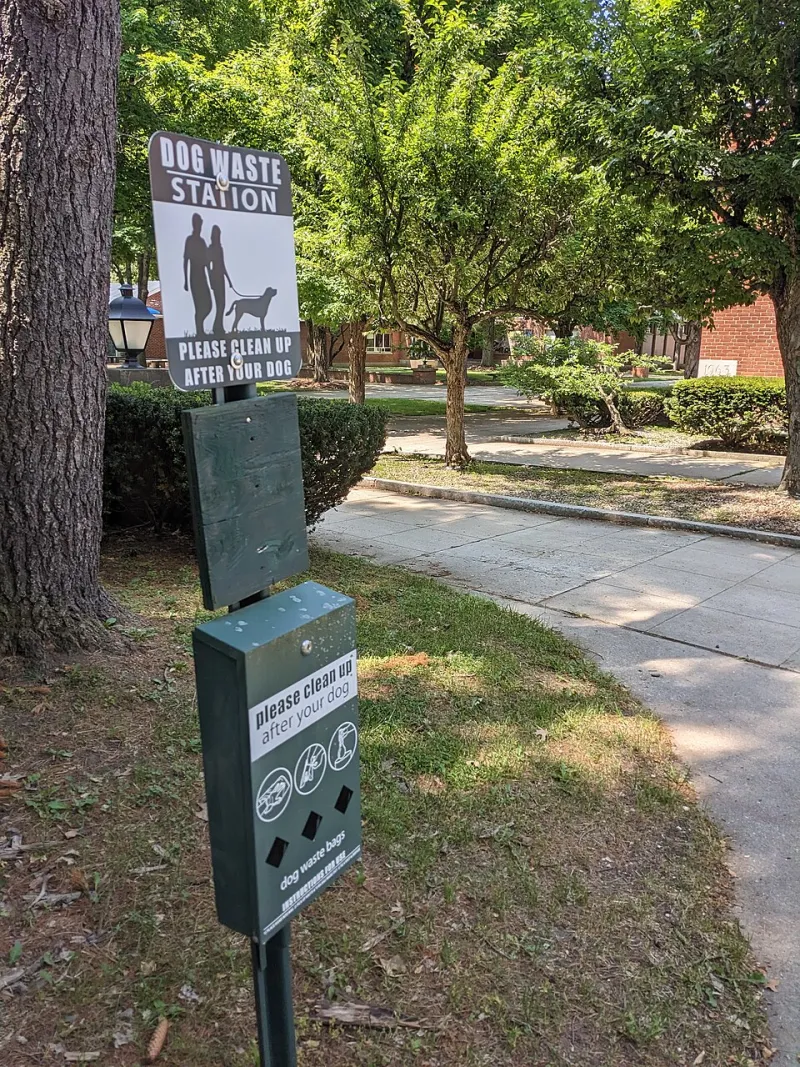
Photo: Artaxerxes, CC BY-SA 4.0, via Wikimedia Commons
It is one of the most reliably British sights in the land. You are walking a footpath in late November. The light is going, the hawthorn is bare, the dogs are doing that thing where they stop dead for no reason. And then, in the hedge, at eye level, you see them: little bags. Tied and dangling. Twelve, twenty, a whole branchful, like a Christmas display that has been curated by a very angry person.
The dog-poo bag tree. Or bag bush, bramble bungee, shame orchard, depending on the parish. It is littering with a moral alibi, and it is everywhere.
What is actually happening
Let's be generous first. The overwhelming majority of dog owners bag it and bin it, and they deserve medals and probably a small plaque. A minority bag it and then — here words fail slightly — hang it in a tree.
The usual explanation is that a bin was expected and not found, so the bag was placed somewhere 'temporary'. Then temporary became permanent, and then a second bag joined it, and then a third, because the first two had clearly established a legible signal that this hedge is a place where things of this nature go.
The kinder interpretation is that nobody wanted to leave a bag in long grass where the mower would find it. Which is thoughtful, technically, and yet.
The taxonomy
The Lone Shame — a single bag on a single twig, tied with care, at roughly shoulder height. Almost poignant. Looks like a small lost lantern.
The Bramble Bungee — the classic. Bag knotted to a thorn and left to swing. Structurally the most successful version: the bag, the knot and the bramble have reached a kind of agreement and will hold for years.
The Orchard — ten or more on one branch, in varying stages of plastic degradation. This is where the practice stops being an accident and starts being an institution. Nobody hung the eleventh bag without seeing the first ten.
The Festive Variant — bags on an evergreen, in December, sometimes with a bush of coloured lights nearby. Something has gone badly wrong here, aesthetically and morally.
The Counter-Bag — a plastic bag hung next to an official 'Please Clean It Up' sign. This is not confusion. This is commentary.
The Bin Fringe — bags hung over or near an overfull dog-waste bin that the council has not emptied since roughly the equinox. The least blameworthy of all, and the most damning about infrastructure.
The council response
Councils have tried everything: more bins, fewer bins, signs in increasingly desperate typography, and the occasional community volunteer morning with a litter picker and a look of shared suffering.
The legal position, for the avoidance of doubt, is that bagging it does not discharge your obligations. Hanging it in vegetation is littering, and fixed penalties vary by council and can run into the hundreds of pounds; leaving the mess uncovered can attract a separate dog-fouling penalty. Nobody has ever been prosecuted for the aesthetic crime of the bag itself, but the offence is real enough.
The signage is where local government gets genuinely creative. You can find notices nailed to the very trees the bags are tied to, which is a bit like putting a fire exit sign inside a burning building.
Why it persists
There's a real piece of social science in this: the 'somebody else's problem' field. Most people will hang a bag if they believe, half-consciously, that somewhere a bin lorry, a volunteer or a council contractor will eventually deal with it. The bag in the tree is not evidence of malice. It's evidence of optimism, which is somehow worse.
There's also the shame gradient. Littering in the open is visible and embarrassing. Hanging it at exactly the height where the eye goes is, oddly, an attempt at tidiness. The bag tree is what happens when the desire to be neat outruns the desire to be responsible.
The grading
Marked on three things: colour (the honest, sad variety of a weathered bag), conscience (how clearly the hanging was an act of displacement rather than laziness) and community shame (whether the local Facebook group has reached the point of posting photographs with close-up arrows).
- The rural lay-by orchard: plastic disguising itself as foliage, roughly forty bags, and a bin fifty metres away. Colour: pale lilac, deeply unsettling. Conscience: absent. Shame: total, unspoken. Grade: D+ but memorable.
- The suburban park entrance: five bags, neatly tied, on a hawthorn, with a working bin twenty metres away. No defence available. Grade: D.
- The neglected bin fringe: twelve bags, one overflowing bin, a sign asking for patience. Not a crime, an infrastructure emergency. Grade: C+ with sympathy.
- The festive evergreen: gaudy, in December, with tinsel. Nondescript, but the audacity is off the chart. Grade: B− for nerve.
- The counter-sign bag: one bag, hung deliberately beside a fouling notice, apparently by way of rebuttal. Almost a piece of performance art. Grade: C for commentary, F for citizenshi.p
What to do
Don't hang it. Carry it. The bag in your hand is an inconvenience; the bag in the hedge is a small, hanging reproach to everyone who walks past for the next four years.
And if your local bin has been full since August, ring the council — politely, doggedly, once a week, like a person who has decided to be a nuisance for the public good. Somebody has to be the somebody else's problem.