The Tarmac Allotment: Britain's Pothole Gardeners and Their Tiny Acts of Rebellion
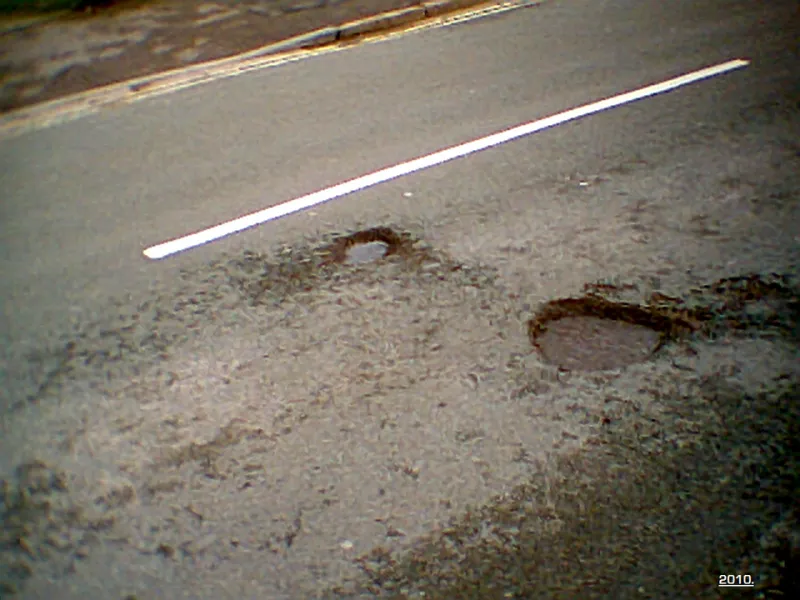
Photo: Snow storm in Eastern Asia at en.wikipedia, Public domain, via Wikimedia Commons
Somewhere in Britain, right now, a pothole is being watered. Not by a council van, nor by a regretful pedestrian with a bottle of warm Evian, but by a person with a trowel, a bag of compost and a quiet, simmering sense of civic injustice. This is the guerrilla road-gardener: part horticulturist, part mischief-maker, and entirely British in the way they apologise to passing traffic while doing it.
The premise is simple. The local authority has declined to mend a crater. So somebody has decided that if it cannot be asphalt, it can at least be aubrieta. What follows is a tour of the nation's most creative acts of tarmac-based cheek — and a scorecard for judging them.
A Very British Kind of Vandalism
The guerrilla garden is not new. It has ancestors in the post-war allotment, the railway embankment, and the sort of person who plants bulbs on a roundabout at midnight. But the pothole garden is different: it is small, specific and pointed. It says: I have noticed. I have noticed that you have not noticed. And I have brought a shrub.
In 2026, with road-repair backlogs still a reliable topic of local radio fury, the pothole gardener has become a folk hero in miniature. They are rarely organised. There is no national society. There is, however, a Facebook group, several subreddits, and a woman in Wiltshire who keeps a spreadsheet.
The Farfillimore Scorecard
We assessed a selection of road-gardens on three criteria. Petals: horticultural ambition and execution. Pluck: the sheer cheek of the enterprise. Council-Letter Risk: the likelihood of a sternly worded envelope arriving.
(There is also a Bench Bonus, awarded for seating. It is rarely deserved, but when it is, it is glorious.)
Case Files from the Kerbside
The Miniature Rockery of Ravenhill Road, Belfast
A pothole roughly the size of a shoebox has been transformed into a rockery, complete with three alpine plants, a piece of slate and what appears to be a tiny cairn. It is immaculate. It is also, technically, a hazard. Score: Petals 9, Pluck 8, Council-Letter Risk 6. The gardener has left a laminated card reading "Please do not park on the flowers." The card is laminated. This is a professional.
The Bench of Bishopston, Bristol
Bristol has form. A crater on a residential street was filled not with tarmac but with a wooden bench, built to scale and occupied by a small teddy bear in a hi-vis vest. The bench is about 30cm wide. It is unusable by humans. It is entirely delightful. The bear has been there for four months and has not been stolen, which tells you something about the neighbourhood. Score: Petals 4, Pluck 10, Council-Letter Risk 9.
The Mosaic of Marsh Lane, Leeds
A crack in the pavement — not technically a pothole, but we are not lawyers — has been filled with a mosaic of broken teacups. It is surprisingly lovely. It is also a trip hazard. The artist has signed it in marker pen, which feels bold. Score: Petals 3, Pluck 7, Council-Letter Risk 8.
The Sunflower Standoff, Powys
A verge pothole outside a village hall has been planted with a single sunflower, staked and labelled "Audrey". The label includes a small biography. Audrey is now taller than the hedge. The council has mown around her twice. This is either tolerance or defeat. Score: Petals 8, Pluck 6, Council-Letter Risk 2.
The Window-Box That Isn't, Sheffield
A deep pothole has been fitted with what can only be described as a window box without the window: a wooden trough, brackets and all, filled with geraniums. It is attached to nothing. It simply sits in the road. This is either genius or a cry for help. Score: Petals 7, Pluck 9, Council-Letter Risk 7.
Telling a Guerrilla Garden from a Sad Cone
Not every decorated hole is a guerrilla garden. Some are just litter with ambitions. A field guide:
- There is a plant label. Sad cones do not label their species. Guerrilla gardeners do, often in Latin, occasionally in Welsh.
- The soil is bagged. If the compost says "Westland" on it, you are in the presence of intent.
- There is a tiny fence. Even a row of lollipop sticks counts. It is a boundary.
- There is a sign, ideally laminated. Lamination is the highest civic honour a road-gardener can bestow.
- The garden has a name. "Audrey" is a garden. "That mess" is a cone.
If the hole contains a traffic cone and a dead chrysanthemum, it is not a guerrilla garden. It is a monument to a cancelled plan.
The Council Position
Councils, for the most part, respond with the weary courtesy of someone finding a second cat in the porch. They cannot publicly endorse it, because of liability. They cannot entirely condemn it, because of optics. The result is a sort of bureaucratic sigh: a letter that begins "Dear Resident" and contains the phrase "we must ask you to remove" followed, almost always, by "thank you for your patience."
Some councils have quietly adopted the practice, filling potholes with wildflower seed and calling it "biodiversity enhancement." This is the dream. The gardener becomes a subcontractor. The trowel becomes policy.
A Word of Caution
Do not plant in a live carriageway. Do not plant anything thorny. Do not plant a bench and then expect the council to insure it. And do not, under any circumstances, plant a sunflower named Audrey outside a village hall in Powys and then move house. Audrey will outlive you.
The Verdict
The pothole garden is not a solution to Britain's road-repair crisis. It is a joke with roots. It is a small, green, slightly passive-aggressive reminder that somebody is paying attention. In a country that loves a queue, a plaque and a mild complaint, it may be the most British form of protest we have: a geranium in a hole, and a laminated sign that says "honestly."